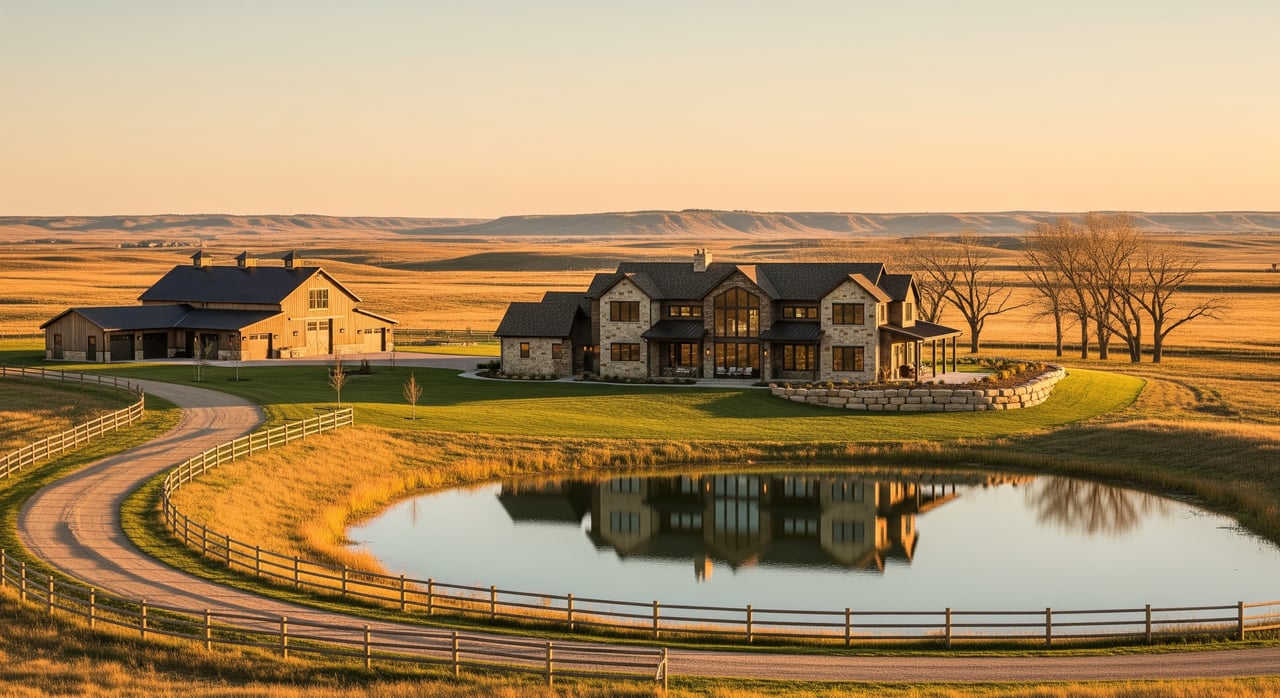
Thinking about trading neighborhood streets for open sky and elbow room, but still want quick access to Bismarck–Mandan? You are not alone. Many buyers choose acreage near Mandan to enjoy privacy, space for hobbies, and a quieter pace while staying close to jobs, schools, and services. In this guide, you will learn what to check for with zoning and covenants, roads and winter access, utilities, outbuildings, insurance, and everyday logistics specific to Morton County. Let’s dive in.
Why acreage near Mandan works
You can live rural without feeling far from town. Mandan sits just west of Bismarck, so you can reach groceries, healthcare, and major routes quickly if you choose the right location. The key is to plan around real drive times, not just map distance. Rural routes vary by road type and weather, and winter conditions can change a 15‑minute drive into a longer trip.
Treat acreage living as a hybrid. You get space and flexibility, but you also take on more responsibility for roads, snow removal, and utilities. With a little planning, that tradeoff can be well worth it.
Know your rules: zoning, plats, and covenants
Acreage near Mandan can be inside a platted subdivision with recorded rules or on an unplatted tract that follows county and township regulations.
- Ask for the recorded plat, all covenants (CC&Rs), and any amendments from the Morton County Recorder’s Office.
- Review covenants for use limits, building envelopes and setbacks, architectural controls, animal guidelines, outbuilding rules, and how road costs are shared.
- If there is an HOA or road association, request bylaws, budgets, meeting minutes, assessment history, and insurance coverage.
- Verify zoning and permitted uses with Morton County Planning and Zoning. Confirm minimum lot size, setback requirements, and whether you need a conditional use permit for specific plans.
- Confirm easements for access and utilities. A recorded ingress and egress easement is essential if the parcel is not on a public road.
Roads and winter access
Roads near Mandan fall into four buckets. State highways are maintained by the state. County roads are maintained by Morton County. Township roads vary by township. Private roads are usually the owners’ responsibility, often through an HOA or road agreement.
If you will use a private road, insist on a written, recorded maintenance agreement. Look for details on grading, regraveling, drainage, snow plowing, and how costs are split. Good drainage and culverts protect the road and your budget.
Plan for winter early. Know who plows the road, where the plow turns around, and how emergency vehicles can access the property. Rural driveways should avoid steep grades and tight turns so fire trucks and ambulances can reach the home when it snows.
Driveways and permits
New or modified driveways that connect to a county or state road may need a permit. Morton County Highway and the North Dakota Department of Transportation review sight distances, drainage, and culvert sizing. Ask for standards up front and follow the specs so you do not face rework later.
On longer driveways, design turnouts or a turnaround so large vehicles can maneuver. This improves safety and helps with deliveries and emergency access.
Water: rural systems and private wells
Some Morton County acreage connects to a rural water system or a municipal extension. Availability depends on the district and proximity to lines, and extensions can add cost. Many properties use a private well.
If you are buying with a well, request the well log, depth and yield, pump age, and recent water test results. Plan to test for bacteria, nitrate or nitrite, and any locally relevant contaminants that may be advised by state or local guidance. Use accredited labs and follow North Dakota recommendations for sampling and interpretation.
Ask when the well was last serviced and who maintains it. Replacement pumps, pressure tanks, and well rehab are predictable lifecycle items that you should budget for over time.
Septic systems and permits
Most acreage uses an on‑site septic system. The system type depends on soil and site conditions, which is why a soil and site evaluation and county permit are typical. Request the septic permit, design documents, and any inspection or pumping records.
Do not close without understanding system age, layout, and condition. Add a septic inspection contingency if records are incomplete. Replacement costs vary by system design and site constraints, so clarity here protects your budget.
Power, natural gas, and backup plans
Electric service is available through investor‑owned utilities or local cooperatives, but new lines or poles may require a line‑extension fee. Confirm serviceability, costs, and timelines with the utility before you commit.
Natural gas is not universal on rural parcels. You may use propane or electric heat. If outages are a concern, evaluate a standby generator sized for your home’s essentials. Check whether covenants address generator placement or screening.
Internet and communications
Broadband access is mixed on rural tracts. Options can include fixed wireless, DSL or cable where plant is nearby, satellite services, and in some cases, fiber from expanding projects. Maps are a starting point, but they are not perfect. Always call providers with the exact address to verify plans, speeds, installation timing, and data caps.
If reliable connectivity is critical for remote work, make service confirmation a contract contingency.
Outbuildings and land use
Many buyers want a shop, barn, or extra garage. Morton County zoning and any subdivision covenants control size, placement, and use. Check setbacks, height limits, and whether the structure counts toward lot coverage.
Some agricultural uses may qualify for different rules, but definitions matter. Confirm the building permit process with the county before you design. For larger structures, ask about inspections and any special requirements.
Fire safety and insurance
Your distance to the nearest fire station, road quality, and available water sources affect emergency response and insurance pricing. Hydrants are rare on acreage, so discuss water supply options like cisterns or dry hydrants with the local fire district when planning outbuildings or landscaping.
Reduce grassfire and wildfire risk with defensible space, clear access, and visible addressing. Talk with an insurance agent who understands rural properties so you can set the right coverage and limits for your home, well, septic, and outbuildings.
Commute and daily life
Drive the route you will use during normal commute hours to see true traffic patterns. When possible, test the route in winter to learn where drifts or ice may form. Small changes in route or driveway placement can make a big difference in winter access.
Plan for everyday services. Confirm school district boundaries and bus stop locations if that matters to your household. Check how you will handle trash, mail delivery, propane or fuel, and packages. In rural areas, you may contract for services individually or use regional transfer stations.
Buyer checklist for Morton County acreage
Use this list to keep your due diligence on track before you sign.
- Recorded plat map, deed, and a current title commitment.
- All recorded covenants and amendments, plus any easements for utilities and access.
- HOA or road association documents: bylaws, budget, meeting minutes, insurance, and assessment history.
- Updated boundary survey and improvement location.
- Well log and recent water test results; service records for the well and pump.
- Septic permit, design, and pumping/inspection records.
- Driveway permits or approvals, if the access connects to county or state roads.
- Written, recorded road maintenance agreement if any portion of access is private.
- Building permit history for the home and outbuildings.
- Contact info for utility providers that serve the property.
Professionals to call during due diligence:
- Title company or real estate attorney for document review and easement clarity.
- Licensed surveyor for boundary and improvement verification.
- NDSU Extension or local conservation contacts for soil and land management guidance.
- Licensed well driller or water‑testing lab for supply and quality evaluation.
- Septic designer or inspector for system condition and replacement options.
- Morton County Planning and Zoning and the Highway Department for permits and driveway standards.
- Local electric, gas, and broadband providers for serviceability and line‑extension estimates.
- Local fire district and an insurance agent experienced with rural properties.
Questions to ask the seller or HOA:
- Who pays for road maintenance and snow removal, and how are costs split?
- Have there been any special assessments in the past five years?
- Are there any verbal agreements about roads or utilities that are not recorded?
- How old are the well pump, septic components, and major outbuildings, and when were they last serviced?
Common pitfalls and how to avoid them
- Assuming city‑style services will be available. Confirm trash pickup, sewer, and utility response times.
- Relying only on broadband maps. Always verify service by address with providers.
- Skipping a boundary survey or ignoring access easements. Clear title and access are essential.
- Overlooking covenants that limit shops, home businesses, or animal counts. Read every page and amendment.
- Underestimating operating costs for roads, snow removal, septic pumping, and heating. Build a seasonal budget.
Mitigation strategies that work:
- Make title, survey, well water quality, and septic inspections firm contingencies.
- Get written plowing quotes and road maintenance history from the seller or HOA.
- Ask for a recorded road agreement if responsibilities are unclear.
- Use inspectors who know rural systems, not just typical city utilities.
Your next step
If acreage near Mandan fits your lifestyle, the right plan will make it smooth and enjoyable. With clear documents, verified utilities, and a solid winter access plan, you can focus on the reasons you wanted land in the first place.
For local guidance from search to closing, connect with Patrick Koski. You will get practical advice on lots, utilities, outbuildings, and timelines so you can buy with confidence.
FAQs
What should I review before buying acreage near Mandan?
- Gather the plat, all recorded covenants, easements, a current title commitment, survey, well and water tests, septic permits and records, road agreements, and any HOA documents.
How do private roads and snow removal usually work in Morton County?
- Owners often share costs through a recorded road or HOA agreement that covers grading, regraveling, drainage, and plowing, including turnaround and emergency access standards.
What should I know about wells and septic on rural property?
- Verify well depth, yield, service history, and recent water tests, and review septic design, permits, and pumping records; add inspection contingencies if information is missing.
Can I build a shop or barn on my Mandan‑area acreage?
- Check Morton County zoning and any covenants for size, height, and setback rules, then confirm permit steps and inspections before you design or order materials.
How can I get reliable internet on acreage near Mandan?
- Start with provider maps, then call providers with your exact address to confirm service type, speeds, installation timelines, and data caps; consider contingencies in your contract.