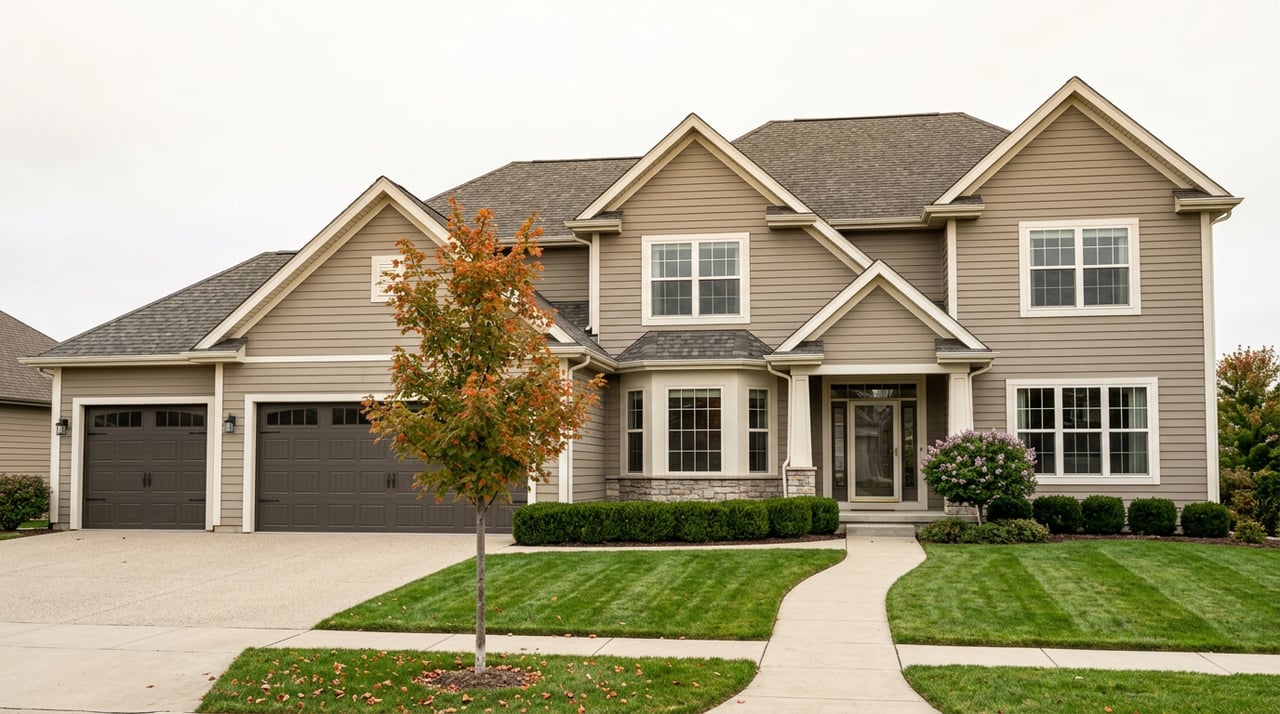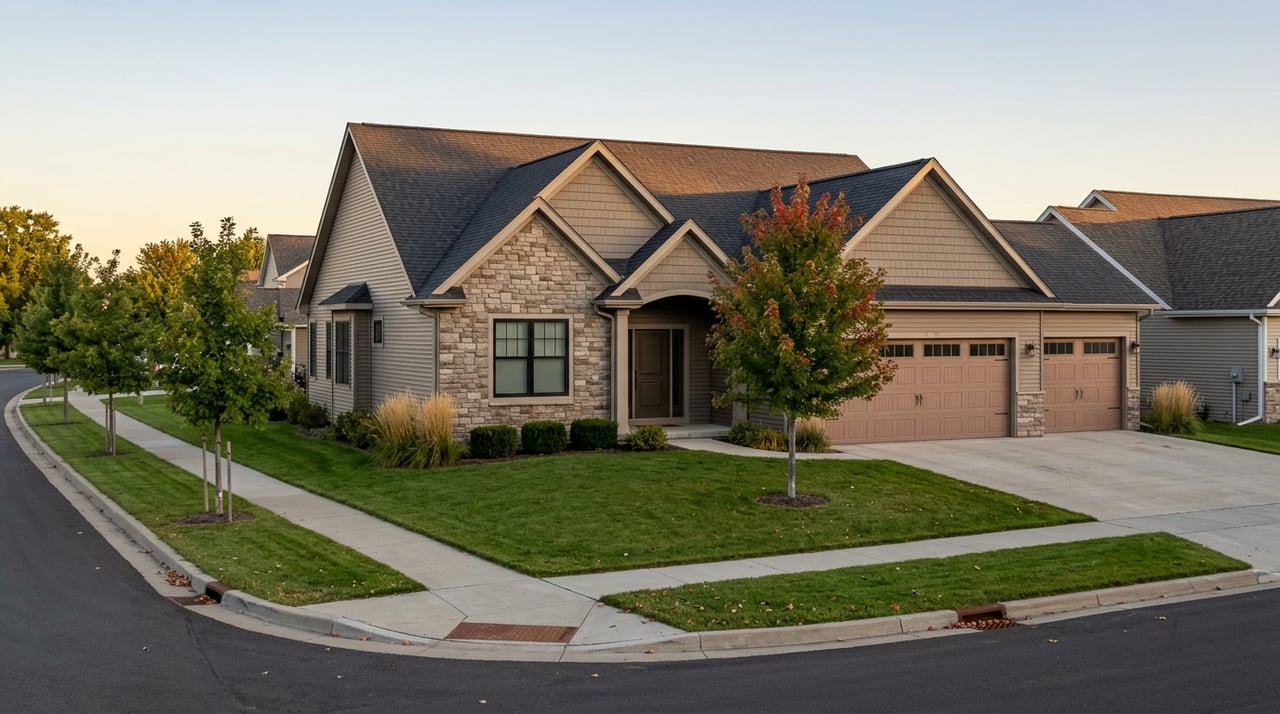
A buyer had five acres under contract east of Mandan, priced well under what the same money would buy inside a platted subdivision. The land looked like the better deal until the builder's utility bid came back. There was no line item for a gas meter hookup. Instead there was a quote for a 500-gallon propane tank, a trenching fee, and a service contract with a delivery company the buyer had never heard of. The land was still cheaper. The house was about to cost more to run for as long as they owned it.
That gap is not a builder's markup or a fluke of one lot. It traces a real boundary that Montana-Dakota Utilities, the natural gas provider headquartered on North Fourth Street in Bismarck, draws around its own pipeline system every year, and that boundary is the thing a land price never discloses.
The Boundary MDU Actually Draws
MDU serves natural gas and electricity to more than a million customers across a five-state footprint stretching from the Rocky Mountains into the northern Great Plains. That scale can make the utility feel universal. Its capital spending tells a narrower story. In 2025, MDU's pipeline replacement work in Mandan covered a portion of the city over four to five months starting in late May. In 2026 the project scaled back from the year before and stayed confined to what the city calls the Midtown East area, Main Street to Fifth Street NE between First Avenue NE and Mandan Avenue, plus a stretch of Sunset Drive between I-94 and Eighth Street NW.
That is maintenance on pipe already sitting under existing city blocks. It is not new main pushed out to raw acreage. North Dakota Public Service Commission service-area data puts a number on how far that line actually reaches: roughly 65 percent of the state's land area has no natural gas distribution main at all. Propane is not a fallback option for new rural construction here. It is the default, built into the geography of who gets a gas meter and who gets a tank.
What Propane Actually Costs, Compared to a Bill You Never See
| In-town natural gas customer | Rural custom build on propane | |
|---|---|---|
| Fuel delivery | Piped, metered, billed monthly through MDU | Trucked, tanked, contracted with a private dealer |
| Upfront equipment | Meter set, typically absorbed into subdivision development costs | Tank purchase or lease, set fee, trenching |
| Annual fuel cost | Bundled into a single monthly gas bill | Separate annual budget line, paid in fills |
| Price exposure | Regulated utility rate | Market rate unless locked by contract |
North Dakota's residential propane price averaged $1.70 a gallon for the week ending March 30, 2026, close to 36 percent under the national average of $2.674 that same week. That discount is real, and it still does not make propane free. A household burning near the low end of the state's typical range of 1,000 to 1,400 gallons a year spends roughly $1,700 annually on fuel alone, before tank rental or delivery charges. An in-town gas customer never sits down once a year to plan and pay for that number in a lump. A rural propane customer does, every fall.
One more detail changes how a buyer should size a tank during the build. Propane tanks are only ever filled to 80 percent of their stated capacity, to leave room for thermal expansion. A "500-gallon tank" delivers a 400-gallon fill. Anyone budgeting heat for a new rural home needs to size the tank to the fill, not the label on the side of it.
The Fill You Book Months Before You Need It
Propane pricing in North Dakota moves with the calendar in a way a natural gas bill does not. The cheapest months to buy are June, July and August, when heating demand is lowest and dealers cut prices to encourage summer purchase. That window matters more here than in most states, because North Dakota grain operations drying wheat, corn, soybeans and sunflowers can burn an extra 1,500 to 4,000 gallons per harvest, with that demand concentrated into the same September-October stretch that also kicks off the home heating season. A rural buyer who waits until October to think about propane is competing with combines for the same trucks.
The contract itself is a decision point most subdivision buyers never face. A will-call or market-rate delivery leaves the household carrying winter price risk, paying whatever the spot rate is on the day the truck shows up. A capped or fixed pre-buy contract shifts that risk to the dealer in exchange for locking in a rate before the season starts. Deciding which side of that trade to take belongs in the same conversation as choosing a lender or a builder, not as an afterthought after move-in.
The Dealers Who Actually Serve These Roads
No single company owns this market, which means the choice of dealer is a real decision, not a formality. Gray Oil Co. lists a service area that reads like a map of the rural ring around Bismarck-Mandan itself: Mandan, Bismarck, Lincoln, St. Anthony, Fort Rice, Solen, New Salem, Almont, Hebron, Center, Washburn, Wilton, Baldwin, Menoken and Sterling, with tank installation, trenching and hookup offered as part of a residential build. Farstad Oil operates out of a Mandan Avenue location and delivers residential propane across the same territory. National providers AmeriGas and Ferrellgas maintain local offices as well, and the farmer-owned Cenex network has a long-standing footprint across the state.
Pricing is set account by account, based on tank size, fill volume, contract type and route density, which means two households a mile apart can get different quotes from the same company. Getting itemized bids from a national provider, a farmer cooperative, and a local independent before signing a first-year contract is the same kind of due diligence a buyer already applies to lenders and inspectors. It just rarely gets applied to heat.
The Power Side Looks Different
Heat gets more complicated outside town. Electricity, on much of this same rural ring, often does not. Capital Electric Cooperative, a member-owned utility headquartered on Yukon Drive in Bismarck, has served rural Burleigh County and southern Sheridan and Emmons counties since 1948. It now counts more than 18,800 member-owners across better than 22,500 meters, drawing power through Central Power Electric Cooperative from a supply mix that includes roughly 15 percent hydropower off the Garrison Dam on Lake Sakakawea. Nearly half its lines, 46 percent, run as buried cable, which keeps outages short even in the coldest stretches. A co-op representative has described three decades in one home with only a single outage lasting past ten minutes.
That reliability is worth naming because it cuts against the assumption that everything gets harder once you leave the city grid. Power on rural acreage near Bismarck-Mandan can be as steady as anything in town. Heat is the utility that actually changes character when you cross that boundary, not electricity.
What This Does to a Land Comparison
The per-acre discount on rural land is well documented. What rarely gets run alongside it is this second number: the annual gap between a bundled gas bill and a standalone propane budget, repeated every winter for as long as the house is owned. Comparing a subdivision lot to raw acreage on sale price alone measures one transaction. Comparing them on total cost of ownership means multiplying that fuel-cost delta across a mortgage term and setting it against whatever the land discount actually saved at closing.
For households that qualify, North Dakota's Low Income Home Energy Assistance Program, administered by the state's Health and Human Services department, covers propane alongside natural gas, electricity, fuel oil, coal and wood. In its most recent reporting year the program helped an estimated 37,000 North Dakotans with $15.3 million in benefits, averaging $161 per household each month. It exists as a resource for eligible households on any of these delivered fuels, not a substitute for running the underlying numbers before you build.
A Few Questions Worth Asking Before You Sign
Will this lot ever get natural gas? Only if MDU extends distribution main into the area as nearby development density grows. It is not something a builder can promise for an isolated parcel today.
Is it better to own the tank or lease it? A customer-owned tank lets you shop dealers every year without penalty. A leased tank ties you to whichever company installed it, which limits your ability to compare quotes later.
Does every propane company charge the same rate? No. Rates are set address by address based on tank size, fill volume, contract type and how many other customers a dealer already serves on that route.
Building custom on rural land near Bismarck-Mandan is still a strong option for plenty of buyers. It just carries a second budget line that a subdivision lot doesn't, and it deserves the same scrutiny as the land price itself. If you're weighing a rural build against an in-town lot and want someone who has priced both sides of that decision, Patrick Koski can walk through the real numbers with you before you sign anything.