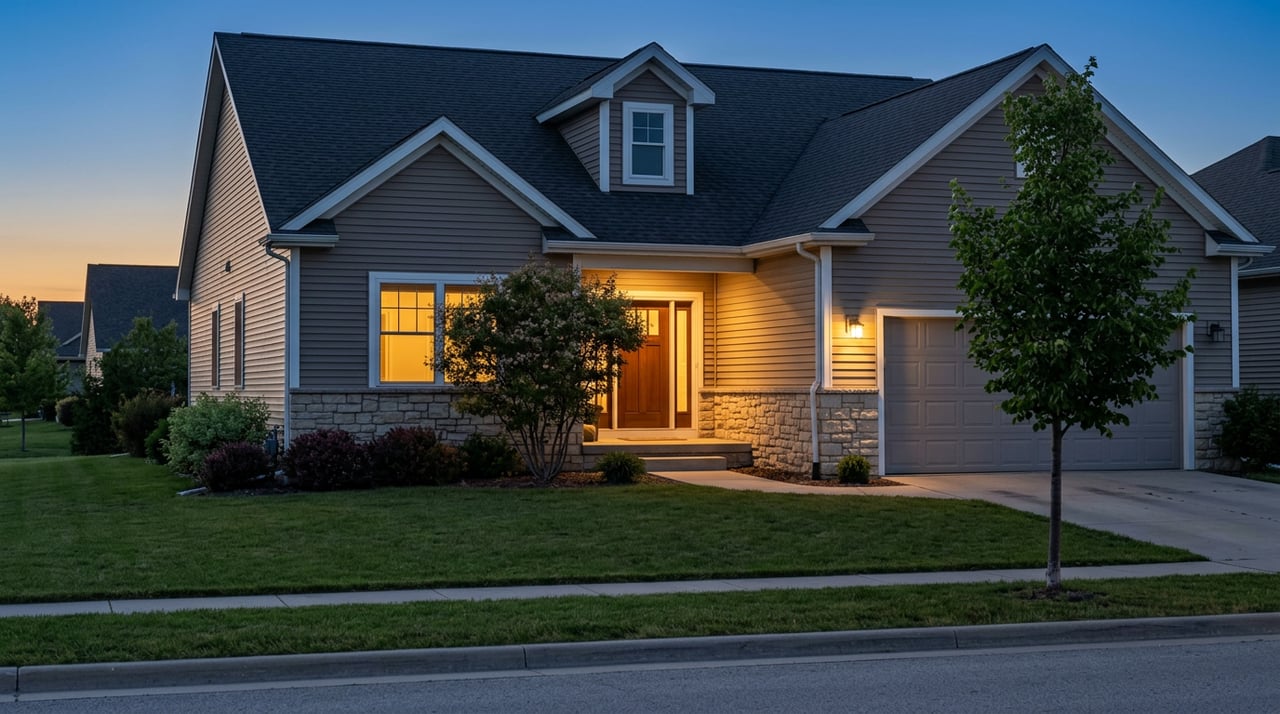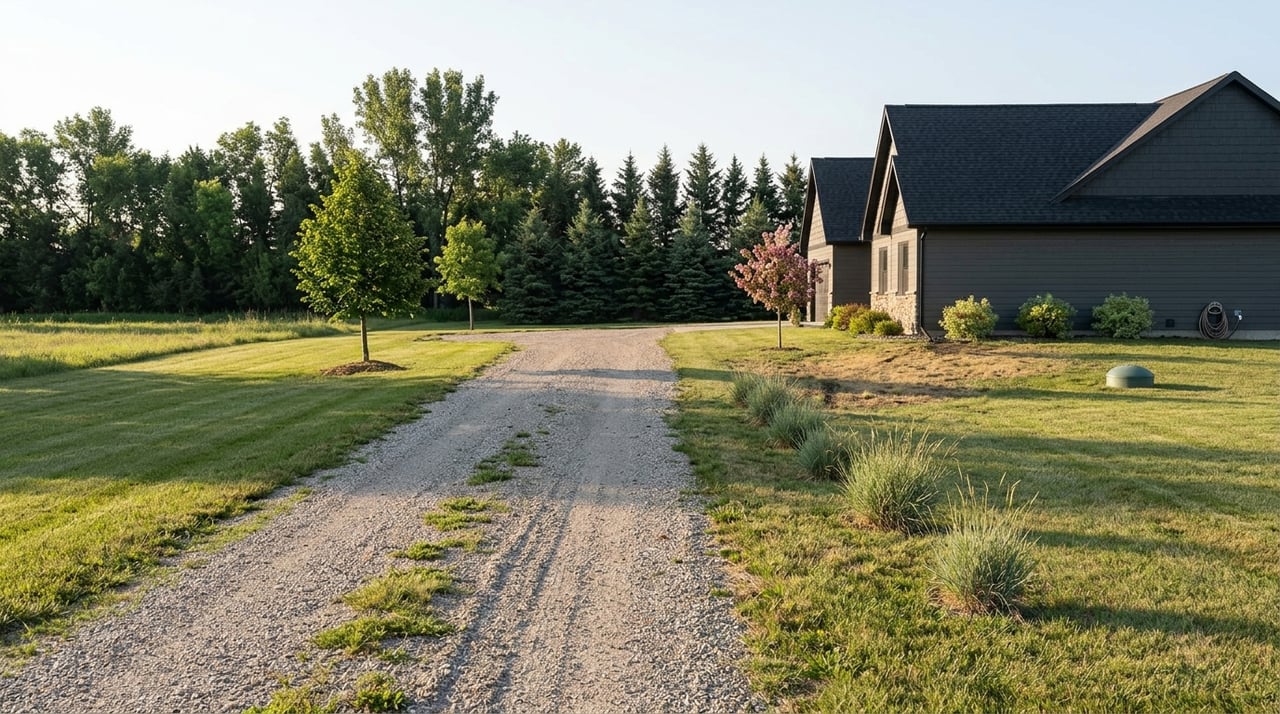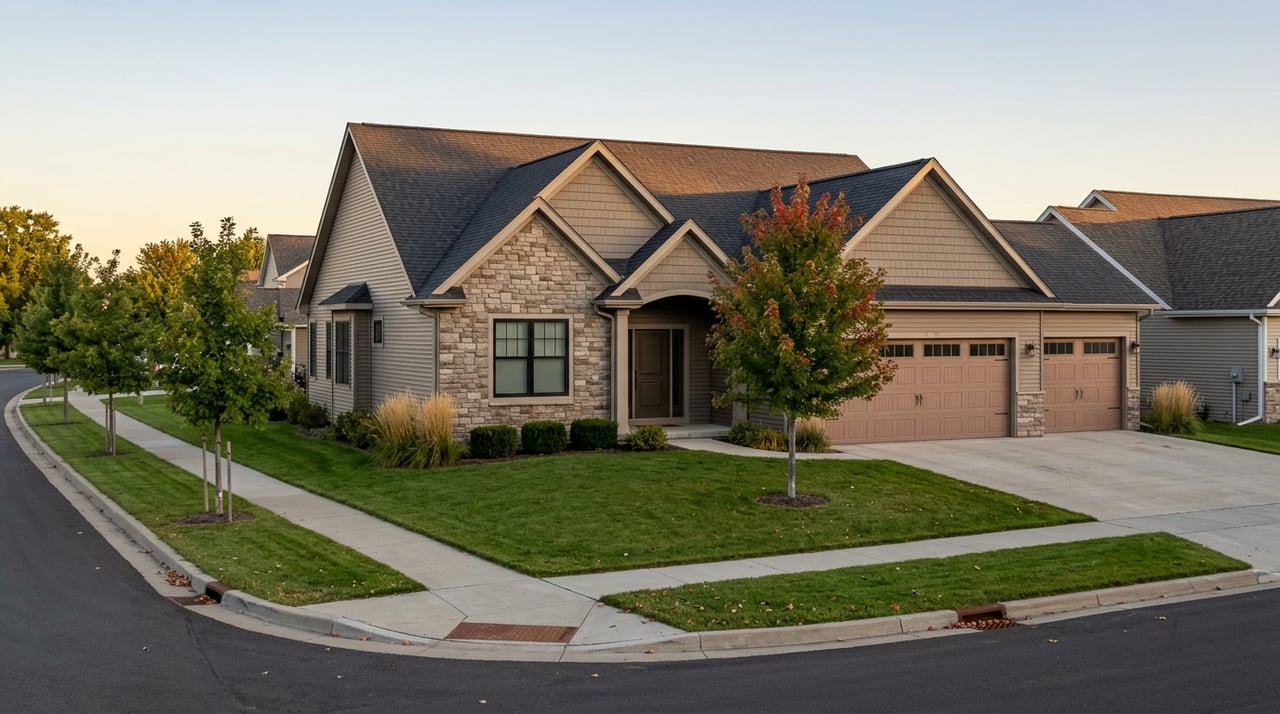
Scroll through new-construction listings in Bismarck's newer subdivisions this fall and you'll start to notice a phrase that wouldn't have meant much five years ago: no specials. Builders in Dakota Breeze are putting it right in the listing copy. Sellers of build-your-own-builder city lots are putting it in all caps. It reads like a bonus feature, tucked in next to square footage and garage stalls. It isn't a bonus. It's a warning about the house next door.
Here's the thing the listing price doesn't tell you. Two homes in the same price range, built by different companies six blocks apart in the same growth corridor, can carry meaningfully different monthly costs for the next decade or more. Not because of the mortgage. Because of how North Dakota cities pay for the streets, sewer lines and storm drains that make a subdivision buildable in the first place.
The Bill That Isn't in the Sale Price
When the City of Bismarck approves a new street, sewer main or storm sewer extension, it doesn't always pay for it out of the general budget. Often it creates a special assessment district and bills the cost directly to the lots that benefit, spread out as installments over 7 to 15 years, paid alongside the regular property tax statement to the Burleigh County Auditor's Office. You won't see it on the sale contract. You'll see it the following year, as a new line on your tax bill.
The process has real guardrails. The City Engineering Department identifies the work, the Board of City Commissioners approves the district, and the district gets published in the Bismarck Tribune twice over a two-week period before anything is billed. Property owners can protest, but only for improvements that aren't health-related. Sewer and water don't qualify for a blocking vote. Everything else does, and if 51 percent of owners by area object, the project gets cancelled. That protest window matters if you're buying into a subdivision where a district hasn't been finalized yet. It also means the district that exists on closing day isn't necessarily the last one that will ever touch your lot.
Ottawa Street, in north Bismarck, is a live example. Property owners along the street petitioned the city for infrastructure upgrades as part of their development, which created an assessment district to cover most of the project cost, with construction scheduled for 2026. That's not a hypothetical case study. It's happening this year, in the same part of town where a lot of new-construction inventory sits.
How the Bill Gets Split
The part most buyers never ask about is how the cost gets divided among lots. It isn't based on home value. It's based on lot geometry, and the formula changes by improvement type.
| Improvement | How it's assessed |
|---|---|
| Storm sewer | Square footage of the lot |
| Sanitary sewer and water | Front footage of the lot |
| Paving and street lights | Per parcel or lot |
| Sidewalk, curb and gutter | Actual amount installed |
That table matters more than it looks like it should. Two homes at the same list price on differently shaped lots in the same subdivision phase can land on two different assessment totals, because a wider corner lot pays more storm sewer assessment per the same floor plan than a narrow interior lot does. A buyer comparing two similarly priced new builds by square footage of house alone is comparing the wrong square footage.
Why This Shows Up Most Where the New Lots Are
This isn't spread evenly across Bismarck. It concentrates wherever platting is still active, and right now that means both ends of the city. In northwest Bismarck, it's Elk Ridge, a 600-acre master-planned development built out in phases, with a public park delivered in its first phase and an elementary school arriving in a later one, and Summit Point at Hawktree, a nearly 1,000-acre master plan on the north side of Hawktree Golf Course that the developer describes as a 30-year build-out. In south Bismarck, it's newer additions like Cottonwood Parkview and Paradise Valley, where builders are still platting single-family, twin-home and commercial lots around a planned private lake.
Developments on that scale don't get their streets and utilities built all at once. They get built in phases, funded phase by phase, sometimes through special assessment districts and sometimes through other mechanisms entirely. The Tyler Parkway extension in northwest Bismarck, crossing Tyler Coulee to improve connectivity between Valley Drive and Cogburn Road, is being funded through the city's half-cent sales tax rather than a special assessment, a tax that voters originally approved in 2018 and extended again in a June 2026 vote through the end of 2038. So within the same growth corridor, one road gets paid for by everyone who shops in Bismarck, and the next gets paid for specifically by the property owners next to it. There's no single rule you can apply across the corridor, north or south. You have to ask about the specific lot.
Same Subdivision, Different Answer
This is the part that catches people off guard even when they've done their homework. Buying in Phase 1 of a development is not the same transaction, financially, as buying in Phase 2 of the same development. Ottawa Street shows why. The assessment district there was formed by petition, after the surrounding development already existed, to fund infrastructure the original build-out didn't include. A buyer who closed on a Phase 1 lot years ago and a buyer closing on a lot today, a few streets away, can end up with two different assessment histories attached to what looks, from the street, like the same neighborhood.
That's also why "no specials" has become marketing language worth paying attention to rather than dismissing as boilerplate. When a subdivision or a set of build-your-own-builder city lots is advertised that way, it's telling you something true and specific about that lot's history, not just repeating a nice-to-have.
What It Does to the Real Number
Special assessments aren't the whole story on why Bismarck property tax bills vary so much block to block, but they're part of it. Current Burleigh County tax records show Bismarck's median tax bill sitting at $2,738 in ZIP code 58501 compared to $3,776 in ZIP code 58503, a gap tied to differences in school district levies and local assessment districts layered on top of the base rate. Across the city, the spread runs even wider once you look at percentiles, with 25th percentile bills around $2,352 and 90th percentile bills above $6,000.
Layer the city's 2026 budget on top of that. Bismarck's 2026 budget carries a 4.4 percent increase in property tax revenue, made up of a 3 percent cap on existing properties under state law HB 1176, with the remaining 1.4 percent attributed to new construction added to the tax rolls, which the law allows on top of the cap. The cap applies to total dollars the city collects, not to any individual property's bill, so a homeowner's actual increase still depends on their own valuation and whatever assessment installments are already attached to their lot. In a growth corridor still adding new construction every year, that math tends to move faster than it does in an established neighborhood with no new districts forming.
Questions Worth Asking Before You Sign
- Does this lot currently carry a special assessment balance, and what's the remaining installment schedule?
- Has the subdivision petitioned for, or is it likely to petition for, any future assessment district for streets, sewer or storm sewer?
- If two lots are priced the same, are they the same shape and frontage, or could the assessment math differ once the district bill arrives?
- Is the road or utility work serving this development funded by special assessment, sales tax, or a mix, and does that answer change street by street within the same subdivision?
None of these questions show up in a standard listing sheet. They show up when you ask the city's Engineering Department directly, or when your agent already knows which Bismarck developments have live petitions in front of the Special Assessment Commission.
A Few Questions People Ask Directly
Does a special assessment balance transfer to a new owner when a house sells? Yes. The remaining installment balance stays with the property, not the seller, unless it's paid off before closing. That's a negotiating point worth raising during a purchase agreement.
Is a special assessment the same thing as an HOA fee? No. An HOA fee is a private, ongoing charge set by a homeowners association for shared amenities or maintenance. A special assessment is a public charge levied by the city to recover the cost of a specific infrastructure project, and it ends once the installment schedule is paid off.
Can a homeowner pay off a special assessment early? Yes. Remaining balances can be paid in full at the Bismarck Finance Office rather than continuing on the installment schedule, which some buyers choose to do at closing to simplify future tax bills.
If you're comparing new construction in Elk Ridge, Summit Point at Hawktree, Cottonwood Parkview, or any other growth-corridor subdivision, the sale price is only half the number. The other half is sitting in a district file at City Hall, and it's worth pulling before you write an offer, not after. Patrick Koski works new construction across the Bismarck-Mandan market daily and can pull the assessment history on a specific lot before you commit to it. Reach out for a free home valuation and consultation to see what a property actually costs to carry, not just what it costs to buy.