"How long it will last, is now up to Mother Nature," Bismarck fishing guide Mike Peluso wrote on Nov. 22 in his Missouri River fishing report. He meant the fall walleye bite near Bismarck, which he called as steady as he has ever seen. In September he was taking limits, and through November he was catching a lot of 18- to 22-inch fish.
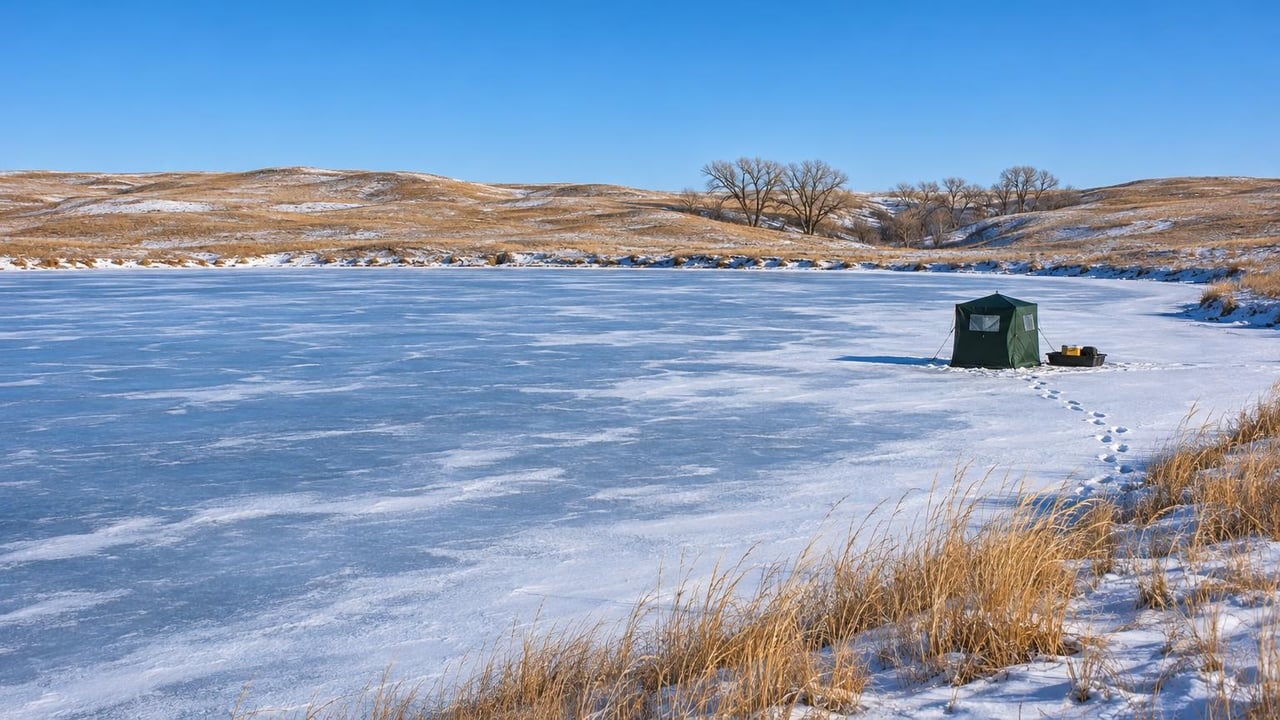
As of that report, the river was still boat water. When the hard-water season does start, the first places to fish won't be the big river. They'll be a short list of dams and ponds in Burleigh and Morton counties, several of them stocked with trout this year, and all within a short drive of town or of the acreages around it.
The River Ends Its Fall With Fewer Ways In
Low water shaped the whole fall on the Missouri. "The water is low and we don't have many usable ramps on the Missouri River near Bismarck right now," Peluso wrote on Sept. 27, and he described anglers picking their way through shallow routes to reach fish holding near the current. His Nov. 1 report said Bismarck-area landings should be congested because there were so few of them.
The reservoirs upstream are holding well below average. The U.S. Army Corps of Engineers' Oct. 31 table had Lake Oahe at 85% of its 1967-2025 average storage and Lake Sakakawea, behind Garrison Dam, at 77%. The Corps put 2026 runoff into the upper basin at 16.2 million acre-feet, or 63% of average. On the night of Nov. 23, the Corps' current conditions page showed Oahe at 1,593.32 feet and Garrison releasing about 12,576 cubic feet per second.
The low water will outlast the winter. On Nov. 2, North Dakota Game and Fish said low levels on Sakakawea, Oahe and the Missouri are expected to cause significant boating access problems through the 2027 season. State and federal agencies are already planning for crowded ramps right after ice-out, and no new open-water tournaments will be approved on the system beyond those already scheduled.
Peluso says he will keep fishing the river on any nice days left before freeze-up, then watch for it to open again in spring. Between those two seasons, the action moves to smaller water.
The Burleigh County Side
McDowell Dam, 4 miles east and 1 mile north of Bismarck on ND Highway 10, has an abundant bluegill population, fewer largemouth bass, and a fishing pier, according to the 2026 North Dakota Fishing Waters directory. The trout are the reason to watch it this winter. Game and Fish's McDowell stocking report lists 300 adult and 700 catchable rainbow trout stocked in 2026. In 2025 the dam got 305 adult cutthroat trout and 700 catchable rainbows.
OWLS Pond sits just west of the Game and Fish office in Bismarck. The department stocks catchable rainbow trout there in both spring and fall, and sometimes adds bluegill, perch, catfish or white bass. The pond has a fishing pier and no ramp. For a Bismarck household, it's the closest trout water there is.
Cottonwood Park Pond, on the west side of the Cottonwood soccer complex in south Bismarck, is best fished early in the season. The directory says it often winterkills and is frequently fishless by mid- to late winter. Its nearest parking lot is gated in winter, so anglers park northeast of the pond and walk in on the paved path.
The Morton County Side
West of the river the list is longer, and most of it is Morton County park water with piers and room to spread out.
Harmon Lake, 8 miles north of Mandan on ND Highway 1806, has abundant largemouth bass, bluegill and crappie, plus some channel catfish and northern pike. Its stocking report has no 2026 entry. The latest stockings listed are adult channel catfish and fingerling largemouth bass in 2025.
Fish Creek Dam is 8 miles south, 2 miles east and 1 mile south of I-94 Exit 134. It has abundant largemouth bass and bluegill, plus smaller numbers of smallmouth bass, crappie and channel catfish. Game and Fish lists 700 catchable rainbow trout stocked there in 2026, the same number as in 2025. Morton County describes the water as clear enough to watch fish follow your bait, with an average depth of 17.2 feet and a maximum of 48.9 feet.
Sweet Briar Lake, 18 miles west of Mandan at Exit 134, is the one walleye option in this group. It also holds fair numbers of northern pike, yellow perch, bluegill, crappie and channel catfish. Morton County lists 10.5 miles of shoreline, an average depth of 10 feet, a floating pier and six earthen fishing piers.
Crown Butte Dam, 4 miles west on the access road north of Exit 147, is a rebuilding fishery. It suffered a winterkill in 2022-23 and has since been stocked with bluegill, largemouth bass and channel catfish.
Two smaller spots round out the list. Porsborg Dam in northwest Mandan may get spring rainbow trout, and Little Heart Pond, 11 miles south of Mandan on 1806, gets catchable rainbows each spring. Our guide to life on acreage near Mandan covers more of that area.
Nelson Lake Stays Open All Winter
One lake within reach won't freeze at all. Nelson Lake in Oliver County, near Center, sits beside the Milton R. Young Station, a coal-fired power plant. Game and Fish's own magazine notes that warm water released from the plant keeps the lake open year-round, which gives largemouth bass there a longer growing season than anywhere else in the state.
Game and Fish manages the fishery and runs an electrofishing survey there each year, from about mid- to late May, to check the balance between predators and prey. In a December cold snap, Nelson is a place to fish open water for bass while the dams closer to town are still freezing.
What the Ice Has to Show First
The National Oceanic and Atmospheric Administration's Oct. 15 winter outlook favored warmer-than-average temperatures across the northern U.S. for December 2026 through February 2027. That outlook covers the season as a whole and doesn't predict when any lake will lock up.
Game and Fish publishes ice safety guidance for these first trips. At 2 inches, stay off. It calls for 4 inches of good ice for a person walking, 6 inches for a snowmobile or ATV, 8 to 12 inches for a car or small pickup, and 12 to 15 inches for a medium pickup. The same page warns that thickness varies across a single lake, and that ice forms more slowly near submerged trees, brush, embankments and structures. It adds that snow on top insulates thin ice and can hide cracks and open water. Drilling test holes as you walk out is the department's standard advice.
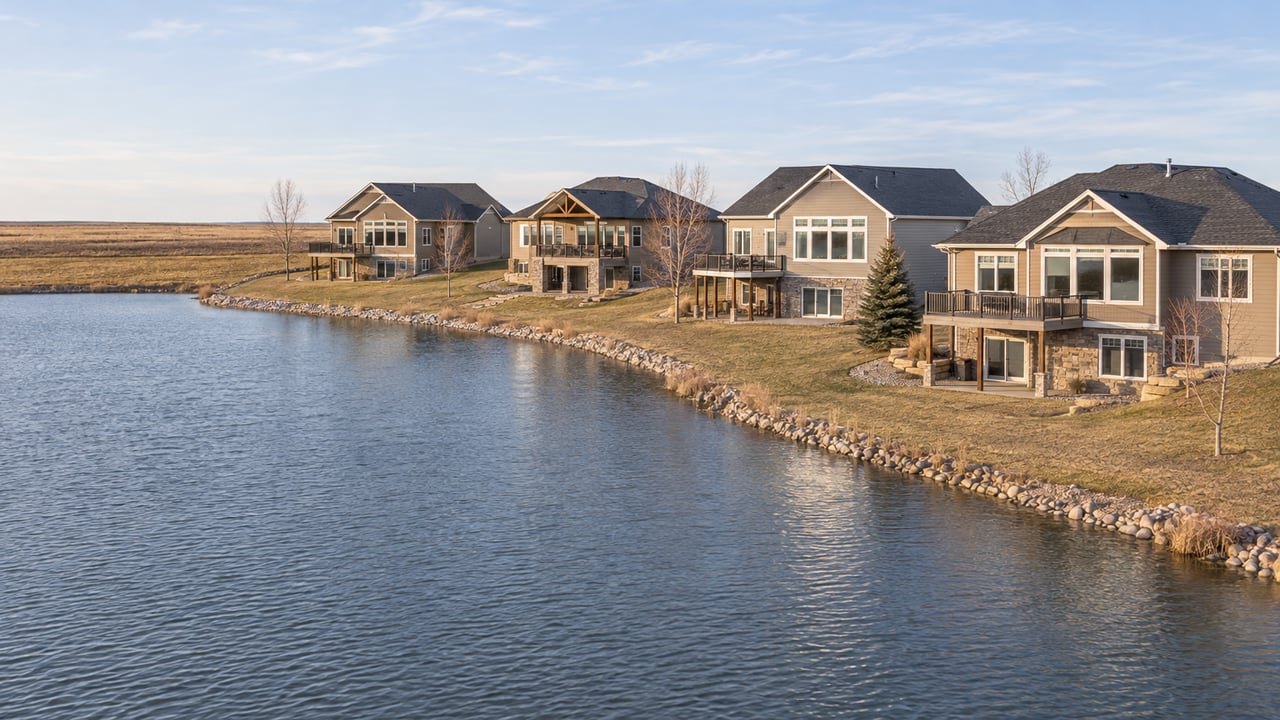
If you'd like to live closer to Harmon Lake, Fish Creek or Sweet Briar, I know the rural areas around Bismarck-Mandan well, from section roads to well and septic questions. Reach out to Patrick Koski for a free home valuation and consultation, and we can talk about what's for sale within a short drive of your favorite fishing water.