Thinking about buying a duplex, triplex, or fourplex in Bismarck? You are not alone. Small multifamily investing can be one of the most practical ways to start building income property experience, but it comes with local rules and numbers you need to understand before you make an offer. In this guide, you will learn how small multifamily works in Bismarck, what to watch for in zoning and taxes, and which beginner mistakes are easiest to avoid. Let’s dive in.
Why Bismarck Appeals to New Investors
Bismarck offers a market that is growing, but still manageable for a first-time investor. The city’s population reached 77,772 in 2024, while Burleigh County reached 103,107, and both have grown since 2020. That kind of steady growth can support rental demand, but it does not mean every unit will rent instantly or at the highest possible price.
Owner-occupied housing still makes up the majority of housing in both the city and county. For you, that means small multifamily investing in Bismarck should be approached with realistic expectations and careful underwriting. A solid deal here is usually built on verified numbers, not overly optimistic rent projections.
As a broad benchmark, median gross rent is about $999 in Bismarck and $998 across Burleigh County. HUD’s FY 2026 Fair Market Rents for the Bismarck metro are $961 for a studio, $1,030 for a one-bedroom, $1,175 for a two-bedroom, $1,634 for a three-bedroom, and $1,884 for a four-bedroom. These figures can help you sanity-check a property, but your final analysis should always come back to actual leases, unit condition, and local comparable rentals.
What Counts as Small Multifamily
In everyday investing language, small multifamily often means a property with two to four units. In Bismarck, though, zoning definitions matter. The city’s code defines a multifamily dwelling as a building with three or more dwelling units.
That distinction matters because zoning is not automatic just because a listing says duplex, triplex, or fourplex. Bismarck’s R10 district is intended for single-family and two-family dwellings, while the RM district is intended for multifamily dwellings. If you are buying with a certain use in mind, you need to confirm that the parcel’s zoning actually allows it.
The safest move is to verify the exact parcel instead of relying on a neighborhood label or a listing description. This is especially important near fringe areas, because zoning and jurisdiction can differ depending on whether the property is inside city limits, in the extraterritorial area, or under county jurisdiction.
Duplex vs. Triplex vs. Fourplex
Not all small multifamily properties carry the same level of complexity. If you are just getting started, it helps to think about them in tiers.
Duplexes are often the simplest start
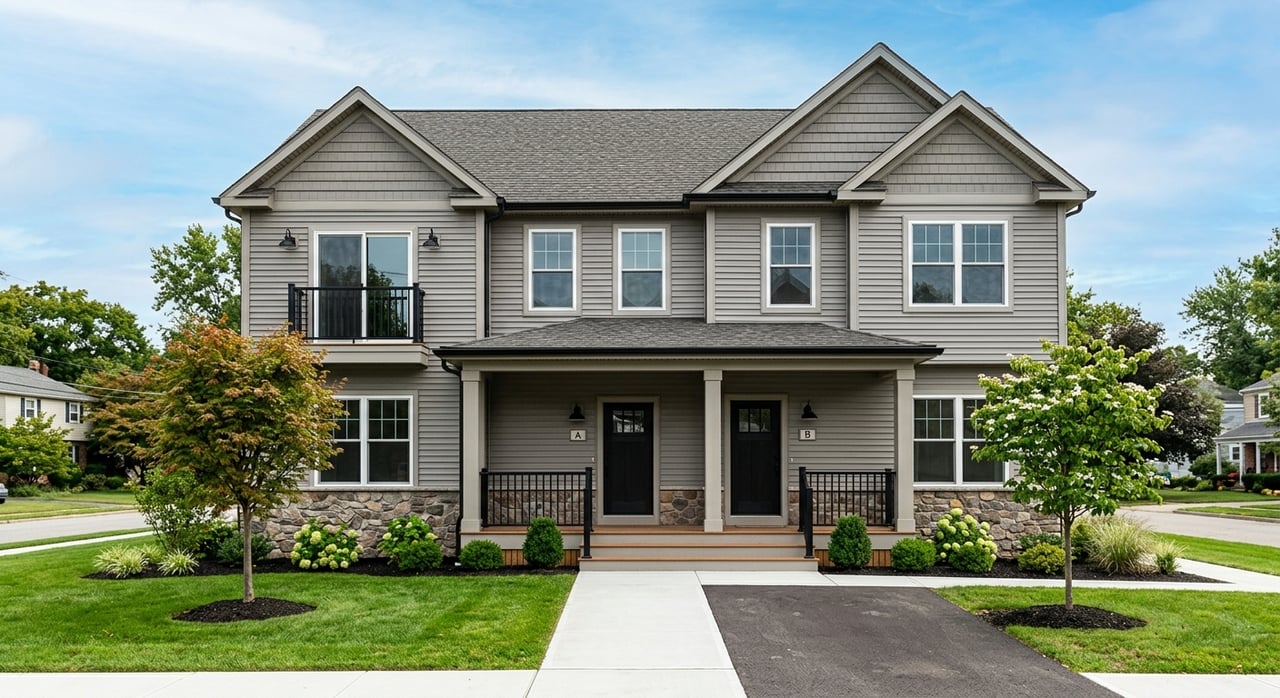
A duplex is usually the easiest entry point because it is straightforward to operate and may fit more easily within lower-density residential zoning. With only two units, it is often easier to track repairs, manage turnover, and understand what is driving cash flow.
For many beginners, a duplex can be a practical first step because it gives you rental income without the operational jump that comes with a larger building. You still need to verify zoning and condition, but the learning curve is often more manageable.
Triplexes add scale and complexity
A triplex can be a good middle ground. It offers more income potential than a duplex, but it also introduces more moving parts, from maintenance coordination to lease administration.
North Dakota tax guidance also treats buildings with fewer than four separate family units as residential. That means a triplex may be underwritten differently than a fourplex from a property tax standpoint, which can affect your overall numbers.
Fourplexes need extra tax attention
A fourplex may look like a natural next step from a triplex, but it deserves closer review. Under North Dakota property tax classification guidance, an apartment building or other building with four or more separate family living units is considered commercial for assessment purposes.
That does not automatically make a fourplex a bad investment. It does mean you should not assume a fourplex will pencil the same way as a triplex. When you compare deals, be careful to account for how tax treatment may affect your underwriting.
How to Underwrite Rent the Right Way
One of the biggest beginner mistakes is using broad rent estimates as if they were guaranteed income. Benchmarks are useful, but they are only a starting point.
Your first step should be to compare the rent roll to local reference points like median gross rent and HUD Fair Market Rent. If a building’s rents are far above or below those figures, that is a signal to investigate further. It does not prove the rents are wrong, but it tells you where to ask better questions.
From there, build your pro forma around the facts tied to that specific property:
- Signed leases
- Lease start and end dates
- Unit mix
- Utility responsibilities
- Vacancy history
- Any concessions or discounts
- Current physical condition
Remember that Fair Market Rent figures are gross rents, which include tenant-paid utilities except telephone, cable or satellite TV, and internet. If you compare one property where tenants pay utilities to another where the owner pays more of them, the headline rent number alone will not tell the full story.
Expenses Beginners Often Underestimate
Cash flow is shaped just as much by expenses as it is by rent. In small multifamily investing, beginners often focus on the income side first and realize too late that recurring costs can change the picture fast.
The major expense categories are usually:
- Property taxes
- Insurance
- Maintenance and repairs
- Vacancy or credit loss
- Utilities paid by the owner
- Management, if used
In North Dakota, real property tax is collected locally by counties. It is due January 1 following the year of assessment and can be paid without penalty until March 1. There is also a 5% discount for full payment by February 15. For Bismarck properties, tax statements and collection run through the Burleigh County Treasurer’s office.
That timing matters when you are budgeting for closing and your first year of ownership. A deal can look very different when you layer in actual taxes, insurance, and repair reserves instead of rough guesses.
It is also helpful to know that North Dakota law does not allow local rent control. In practical terms, that means your future rent growth should be based on market demand and lease structure, not on the assumption of a city-imposed cap.
Due Diligence That Matters in Bismarck
The most expensive mistakes in small multifamily are often made before closing. Bismarck has a few due diligence items that deserve extra attention.
Verify zoning and jurisdiction first
Before you make an offer, confirm the parcel’s zoning and whether it falls inside city limits, within the extraterritorial area, or under Burleigh County jurisdiction. The city has a formal zoning verification request process, and the extraterritorial area boundary changed effective March 1, 2026.
If you are looking at a fringe property, this step becomes even more important. A general map view is not enough if your investment plan depends on unit count, future additions, or a different use.
Check permits for any value-add plan
If your strategy includes renovation, conversion, or a use change, do not treat permits as an afterthought. Bismarck requires permits for new construction, change of occupancy, additions, renovations, remodels, and mechanical or utility work such as electrical, plumbing, and HVAC.
For many small multifamily projects, site plan review is typically required for all development other than single-family residential. That is usually followed by a building permit and then a certificate of occupancy after final inspection. If your plan depends on raising rents through improvements, your timeline needs to reflect those steps.
Review infrastructure on infill or redevelopment deals
If you are eyeing an infill lot, redevelopment site, or potential teardown, check infrastructure early. Bismarck notes that land along streets without water, sanitary sewer, curb, paving, or other infrastructure must follow improvement procedures.
Even on improved streets, adding buildings or parking lots may trigger site plan submittal procedures. A project that looks simple on paper can become more involved once infrastructure and site requirements come into focus.
Don’t skip flood review
Flood due diligence matters, especially near the Missouri River or in lower-lying areas. If you are buying an older property or planning a rehab, flood map review should be part of your pre-closing checklist.
This is one of those items that can affect insurance, renovation costs, and long-term risk. It is much easier to understand it before closing than after.
Know the Operating Rules Before You Buy
A good beginner investment is not just about purchase price and rent potential. You also need to understand the basic operating rules that come with being a landlord in North Dakota.
Under North Dakota landlord-tenant law, security deposits must be kept in a federally insured interest-bearing account. Deposits are generally limited to one month’s rent, and the law requires an itemized refund within 30 days after move-out. Deductions are limited to damage, unpaid rent, or cleaning and repairs beyond normal wear and tear.
The law also requires a move-in condition statement. That is not just paperwork. It is a key record that helps document the condition of the unit at the start of the tenancy.
Landlords may enter only at reasonable hours and in a reasonable manner for inspection, repairs, services, or showing the unit, unless there is an emergency. If you buy an occupied property, security deposits and accrued interest must be transferred to the new owner, and the seller is not relieved of liability until that transfer happens. That is why lease files, deposit records, and move-in documentation deserve careful review before closing.
Bismarck also has rental housing standards that set minimum habitability criteria and provide a complaint process for alleged violations. For you, that means property condition is not just a cosmetic issue. Safety items, structural condition, and basic habitability should all be part of your inspection mindset.
Fair housing compliance also matters from day one. Screening, advertising, and lease practices should be consistent and documented.
A Smart Beginner Game Plan
If you want to keep your first small multifamily purchase simple, focus on a property type and strategy you can realistically manage. In many cases, that means starting with a duplex or a straightforward triplex rather than a more complicated redevelopment or conversion project.
As you compare opportunities in Bismarck, keep your checklist practical:
- Verify zoning and jurisdiction
- Review current leases and deposit records
- Confirm tax treatment, especially for fourplexes
- Underwrite repairs conservatively
- Check permit needs for any planned improvements
- Review infrastructure if the deal involves redevelopment
- Check flood considerations before closing
The goal is not to find a perfect property. The goal is to avoid preventable surprises and buy something you can operate confidently.
Small multifamily investing in Bismarck can be a smart way to enter the income-property market, especially when you approach it with clear numbers and local due diligence. If you want help evaluating a duplex, triplex, fourplex, or development-minded investment opportunity in the Bismarck-Mandan area, Patrick Koski can help you look at the property through both a real estate and construction-minded lens.
FAQs
What is considered small multifamily in Bismarck?
- In practical terms, buyers often mean two to four units, but Bismarck zoning defines a multifamily dwelling as a building with three or more dwelling units.
How should beginners estimate rent for a Bismarck multifamily property?
- Start with actual leases and rent rolls, then compare them to local benchmarks like Bismarck median gross rent and HUD Fair Market Rent to test whether your assumptions are realistic.
Why does a fourplex in North Dakota need extra review?
- North Dakota property tax guidance treats buildings with four or more separate family living units as commercial for assessment purposes, which can affect underwriting.
What Bismarck due diligence steps matter most for small multifamily buyers?
- The biggest items are verifying zoning and jurisdiction, checking permit requirements for any rehab or use change, reviewing infrastructure on redevelopment sites, and completing flood review where relevant.
What should buyers know about security deposits in North Dakota rental property?
- State law generally limits deposits to one month’s rent, requires them to be held in a federally insured interest-bearing account, and requires an itemized refund within 30 days after move-out.
Does Bismarck have rent control for multifamily property?
- No. North Dakota law does not allow local rent control, so rent growth expectations should be based on lease terms and market demand.