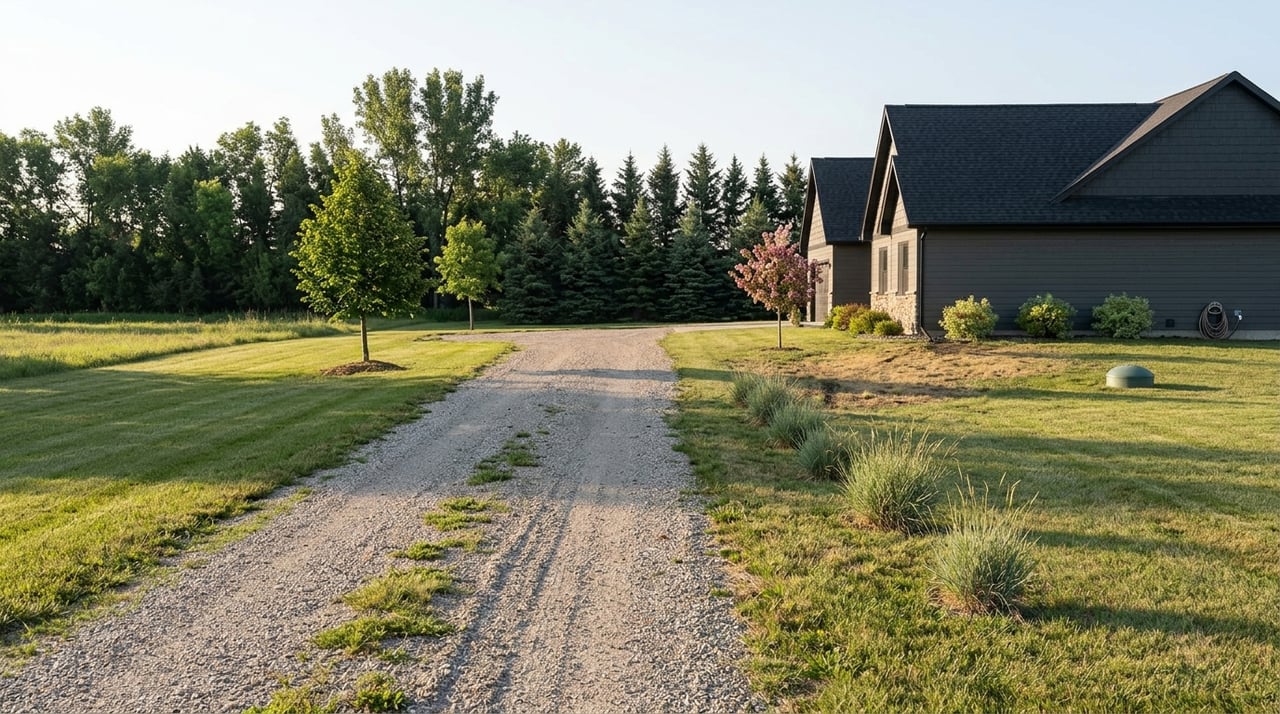
Drive a township road east of Baldwin or south of Sterling on an evening in mid-August and the loudest thing you'll hear is a combine two fields over, running late because the header lights are the only lights for miles. It feels like the calm part of the year. It is not. It is the last quiet stretch before three completely separate systems, one driven by weather, one by county zoning, one by a governor's proclamation, land on the same six weeks and change what rural life around here actually looks like from Labor Day through mid-October.
None of these three things were coordinated with each other. That's the part worth understanding if you live out here rather than just visit.
The Roads Are Busier Right Now Than They Were Two Weeks Ago
If the grain trucks feel more frequent this week than last, that's not an impression. Spring wheat harvest across the region jumped from roughly 5 percent complete to 24 percent complete in a single week, according to USDA crop progress data reported for the week ending August 9, 2026. In North Dakota specifically, the crop's good-to-excellent rating slipped from 49 percent to 47 percent over that same stretch, a decline tied directly to heat and limited moisture rather than any disease or pest problem.
Here's the part that matters for anyone sharing a road with a combine this month: a faster harvest isn't a longer harvest spread thinner. It's the same volume of grain moving through the same elevators in fewer days, which means the trucks and equipment concentrate instead of trickling. Hot, dry weather sped up crop development, so the window where you're most likely to meet a piece of slow-moving equipment on a section line road is shorter and more crowded than in a cooler, wetter year. That's a mechanical fact about this specific season, not a general reminder that harvest happens every August.
A Corn Maze That Found Out the Hard Way What County Zoning Actually Covers
DJ Coleman Farms, a fifth-generation, multi-crop and cattle operation headquartered in Baldwin, spent years running the Coleman Corn Maze on a piece of ground just east of Bismarck. Then the operation ran into something most people don't associate with farm life at all: a zoning category that didn't exist.
By the farm's own account, Burleigh County's planning and zoning rules treated the maze, a hayride, a pumpkin patch, and the traffic that comes with them, as a use the county's agriculture recreation policy hadn't been written to handle. The maze couldn't run that season. What happened next is the useful part. Producers, educators, and what the farm's own site calls "rural lifestyle lovers" showed up to county meetings, and the planning and zoning commissioners agreed to revisit the agriculture recreation policy rather than let the disagreement sit. The maze has since relocated to the Baldwin Greenhouse north of Bismarck, a different address than the one longtime visitors remember.
If you live on county land yourself, that's the thing to file away. A working farm deciding to host a corn maze, a produce stand, or a wedding barn isn't automatically covered by the same rules that govern row crops and cattle. County zoning for agricultural land was largely written for agriculture, not agritourism, and when the two overlap, the resolution runs through a public meeting, not a building permit clerk.
Papa's Pumpkin Patch Never Had That Problem, and That's the Point
Contrast that with Papa's Pumpkin Patch at 5001 Fernwood Drive in Bismarck, which North Dakota's own tourism office calls an icon of the state's agritourism scene. It has run its corn maze, hayrides, straw bale maze, and pony rides in the same spot for years, typically opening in mid-September and running into late October, without a relocation story attached to it. The difference isn't the quality of either operation. It's where the property sits relative to city and county planning boundaries. Land inside Bismarck's jurisdiction and land out in unincorporated Burleigh County answer to different rulebooks, and a business built around drawing weekend crowds runs into that difference the moment it starts advertising ticket prices instead of just selling sweet corn.
That's a small detail with a bigger implication if you're weighing rural acreage against something closer to town. The appeal of space and distance from neighbors is real. So is the fact that county land use rules are still being written in real time for uses that didn't exist a generation ago, and you may be the test case.
Eight Openers in Forty Days
The other system stacking onto this same window has nothing to do with weather or zoning. It runs on the state's proclamation calendar, and it turns rural roads and section-line ditches into shared space with hunters for weeks at a stretch. North Dakota Game and Fish Department's tentative 2026 opening dates, still pending the governor's formal proclamation, lay out a sequence that starts before Labor Day and doesn't let up until pheasant season:
| Season | Tentative 2026 Opener |
|---|---|
| Dove | September 1 |
| Mountain Lion | September 4 |
| Sharptail, Hun, Ruffed Grouse, Squirrel | September 12 |
| Youth Waterfowl | September 19 |
| Early Resident Waterfowl | September 26 |
| Pronghorn Gun | October 2 |
| Youth Pheasant | October 3 |
| Pheasant, Fall Turkey | October 10 |
That's eight distinct openers inside forty days, each one changing who's parked along which approach and which fields have orange vests moving through them on a given Saturday morning. Deer muzzleloader season follows in late November, but the real shift for daily rural life happens in this six-week stretch, when a quiet weekend suddenly has trucks with out-of-state plates parked at section corners and hunters walking ditch lines that were empty all summer.
What the Overlap Actually Means If You Live Out Here
None of these three systems checked with each other before landing on the same six weeks. Harvest timing follows temperature and moisture. The agritourism calendar follows whatever zoning resolution a county commission reached in its own time. The hunting calendar follows a governor's proclamation that won't even be finalized until closer to the dates themselves. The result is a rural September and early October that looks nothing like the quiet August evening on that township road, and looks that way for three unrelated reasons at once.
A few things that follow directly from that:
- Expect the busiest grain-truck traffic on county roads to land in a tighter window this year than in a cooler, wetter season, simply because the crop is drying down and coming off faster.
- If you're weighing agritourism as a use for your own acreage, understand that county agriculture recreation policy has been actively revised in response to real disputes, and it's worth a conversation with your county planning office before you build a following, not after.
- The last two weeks of September and first two weeks of October will bring more non-local traffic to gravel roads and section corners than any other stretch of the year, driven by openers most residents don't track species by species.
None of this changes what makes rural life around Bismarck-Mandan worth choosing. It just means the calm you're feeling on the roads right now has a shelf life, and the reasons it's ending aren't the ones a typical fall calendar would tell you to expect.
If you're weighing acreage, a working farm parcel, or a move further out from town and want a read on how zoning, land use, or seasonal traffic patterns might affect a specific property, Patrick Koski has spent enough time in these counties to walk through it with you. Reach out for a free home valuation and consultation before you make a decision on rural property around Bismarck-Mandan.